

Market Overview:
If markets feel like a high-stakes Vegas casino, it’s because they are. Trump’s return to tariffs, AI disruption, and bond market uncertainty have turned this into an all-out gambling table, where every major economic event could be the next roll of the dice.
The image from The Hangover captures the current market psychology perfectly—some traders are cheering the AI rally, others are all-in on tariffs being a short-term bluff, and a few are staring down their portfolio like Galifianakis calculating odds at the craps table. Either way plenty of ideas and range. For not as active folks, its too early for clear direction and zoom out for ranges.
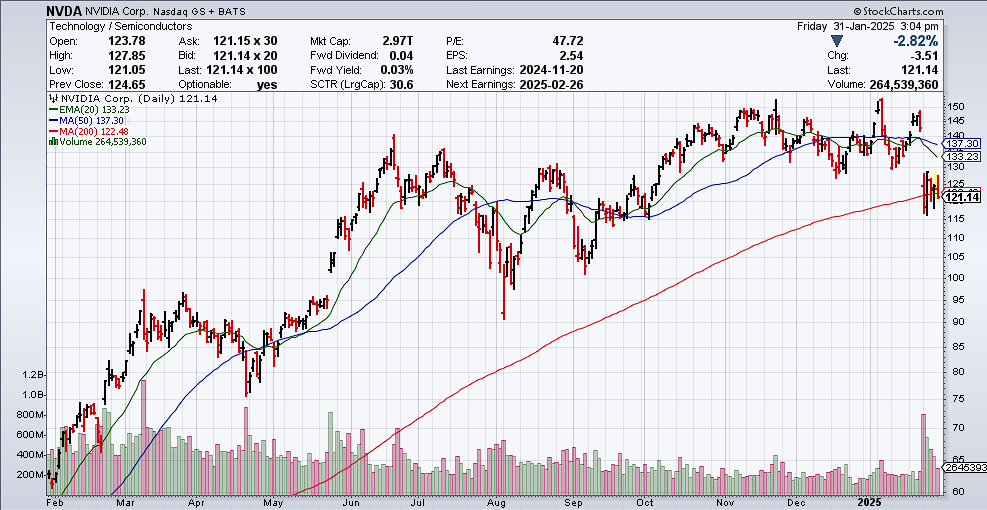
DeepSeek blindsided markets with its AI breakthrough, sending NVDA down 12% before tech bulls bought the dip.
Trump’s tariff announcements had everyone guessing—was it a real shift in trade policy or just a negotiating tactic?
The bond market is playing its own high-stakes game, with Stanley Druckenmiller still shorting Treasuries and warning that inflation isn’t dead.
The bigger question is whether Trump is channeling McKinley—the last U.S. president to push aggressive tariffs as a long-term economic strategy. While McKinley’s tariffs initially triggered inflation and retaliation, they ultimately strengthened U.S. industry. If Trump’s tariffs are more than just election-year posturing, the market may be underestimating the long-term implications.
Tech earnings from META, MSFT, TSLA, and AAPL were mixed:
META soared to an all-time high despite ramping up AI investments.
MSFT dropped on Azure’s weaker-than-expected growth, raising concerns over AI/cloud capex.
AAPL climbed despite an iPhone sales miss, as better-than-expected guidance reassured investors.
But as noted in chat on Friday, NVDA is under 200day with put/call low and margin high
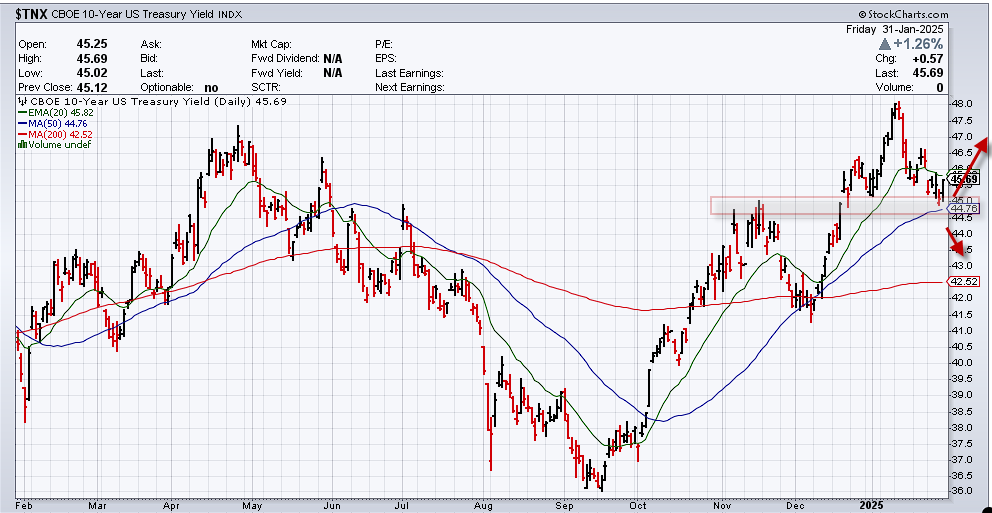
Bond yields fell last week, with the 10-year Treasury yield dropping 12 bps to 4.506%—a net positive for equities. However, with Fed rate cut expectations fading, upcoming economic data will be critical
Macro Pulse: Tariffs, AI, and Market Dispersion
Trump’s Tariffs: Inflation Risk or Strategic Play?
Goldman Sachs sees tariffs as a revenue generator, especially given excessive government spending.
Others have noted that tariffs might be the lesser of two evils compared to tax hikes but warned of potential retaliation from key trading partners.
If tariffs go through as planned, inflation could tick higher, complicating the Fed’s path to rate cuts.
Key sectors at risk:
Automotive (Ford, GM, Tesla) – Higher costs on imported materials.
Retail (WMT, TGT, COST) – Potential price hikes for consumer goods.
Semiconductors (NVDA, AMD, AVGO) – Supply chain disruptions.
Goldman Sachs: Market Dispersion at Extreme Levels
Last week saw one of the highest dispersion weeks in 25+ years.
The volatility spread between SPX (15%) and individual stocks (45%) is at levels last seen during the 2020 election and vaccine rollout.
This favors active traders and hedge funds over passive index investors—the market is no longer moving in sync, creating major winners and losers.
AI Shakeup: DeepSeek’s Disruption
DeepSeek’s claim that its AI model can match ChatGPT at a fraction of the cost initially crushed AI infrastructure stocks.
NVDA (-12%), AMD, and AVGO are feeling the heat, while GOOGL and MSFT are reassessing AI infrastructure spending.
The market flipped its narrative, seeing lower AI costs as an accelerant for adoption, but expect more volatility in AI names.
Druckenmiller’s Warning: The Bond Market Isn’t Out of the Woods
Still short Treasuries, Druckenmiller sees inflation risks as underappreciated and warns of a potential bond market shakeout.
If the 10Y yield jumps back toward 4.80%, equity markets could face renewed pressure.
Friday’s Jobs Report: The Next Big Catalyst
A weak report could revive Fed rate cut speculation, boosting stocks.
A strong report could drive yields higher, reinforcing fears that inflation isn’t cooling.
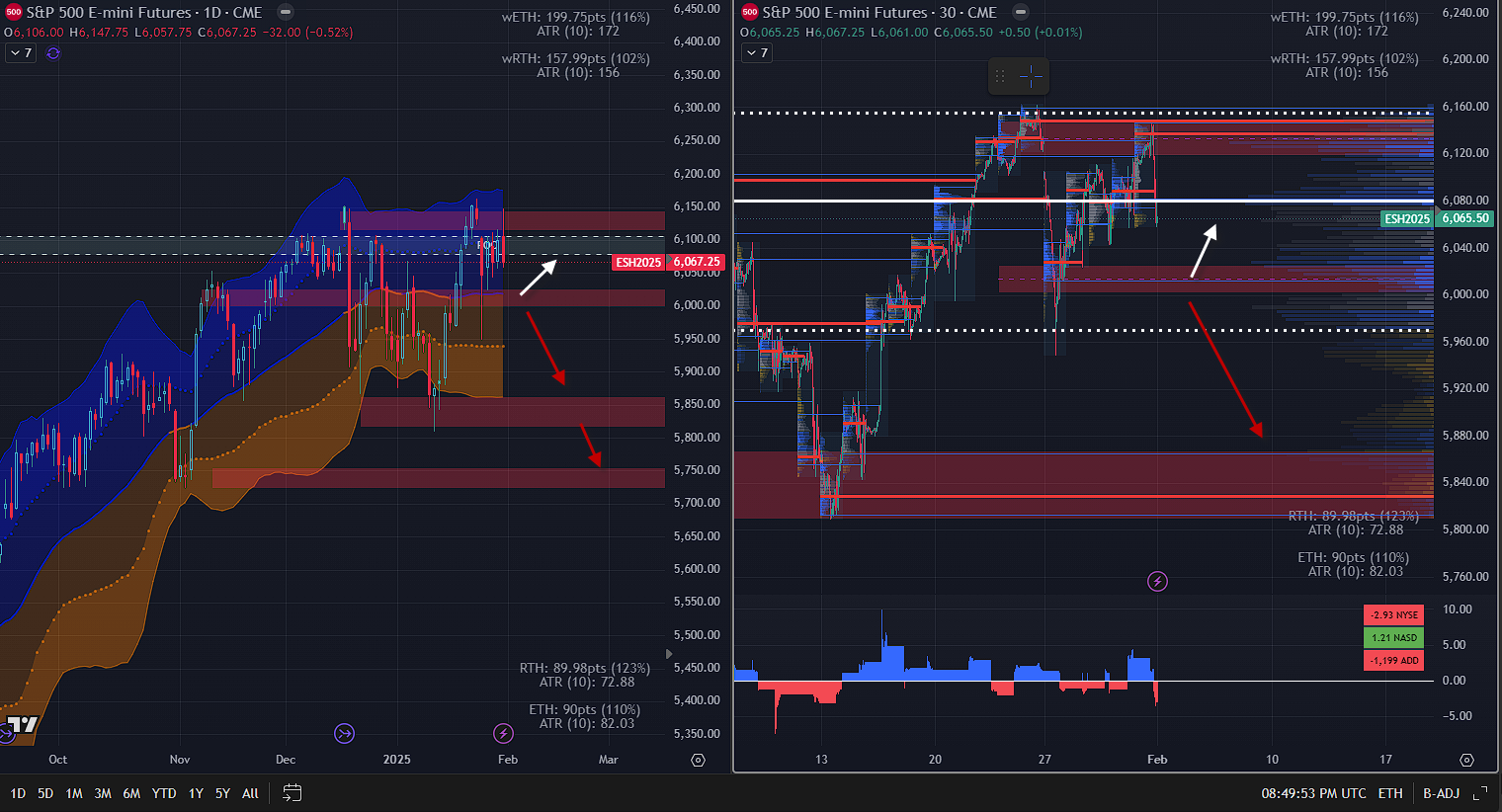
ES/SPX Pulse: Higher Volatility, No Clear Direction
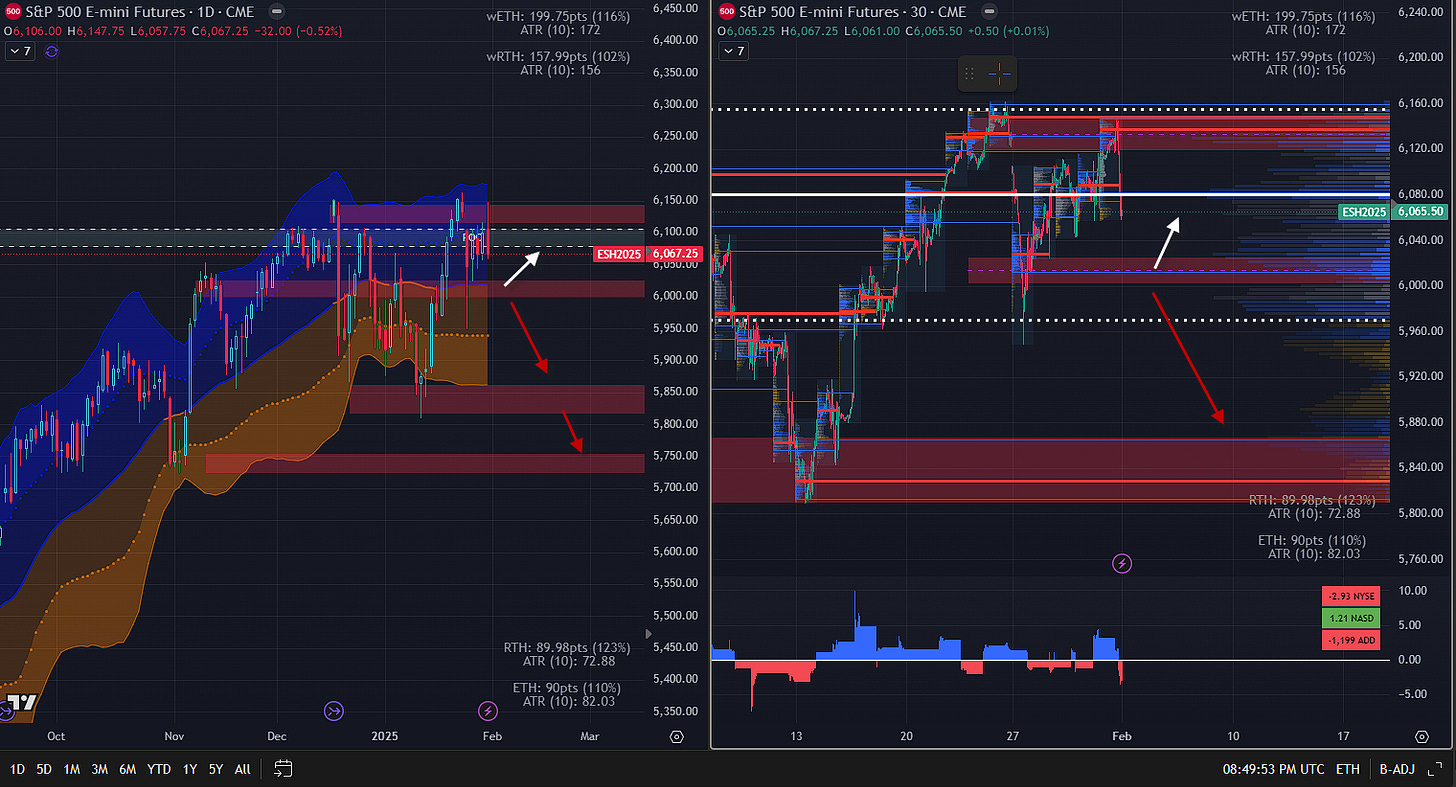
Bias: Expect volatility, but no clear trend as markets react to tariffs, AI shifts, and earnings.
Key Levels:
For ES 6000-6025 looks like we hold. or starts to get unhinged.
Key Events: Economic Data & Earnings to Watch
Economic Calendar
Monday (2/3): ISM Manufacturing Index, Construction Spending
Tuesday (2/4): Factory Orders
Wednesday (2/5): ADP Employment, ISM Services PMI
Thursday (2/6): Initial Jobless Claims, Productivity & Labor Costs (Q4)
Friday (2/7): Nonfarm Payrolls, Unemployment Rate, Average Hourly Earnings
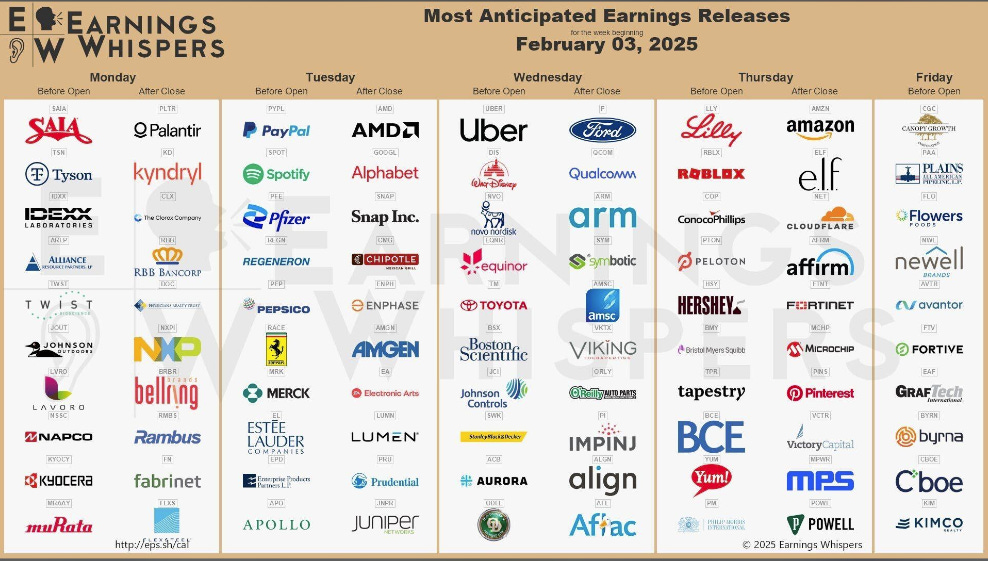
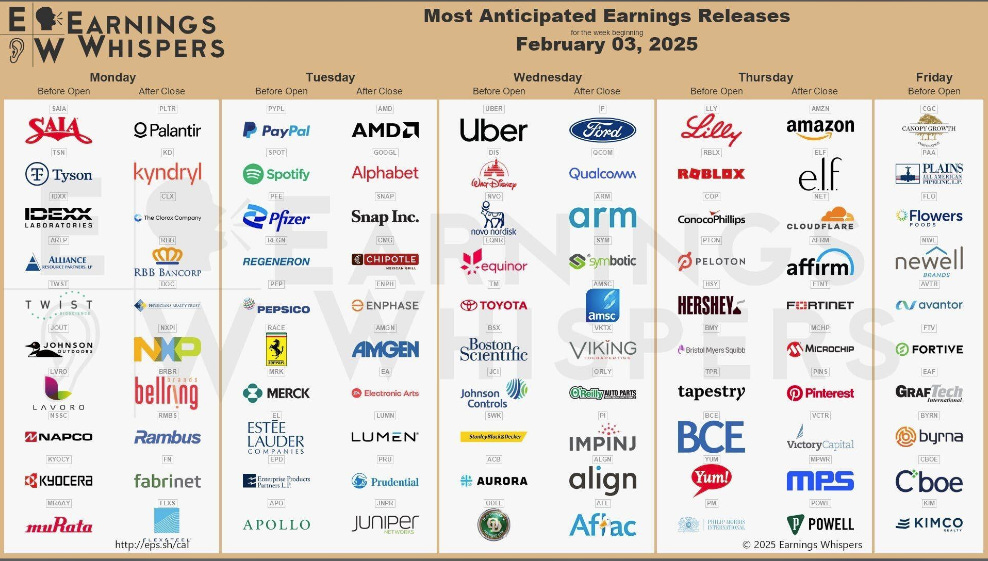
Earnings Highlights
Monday (2/3): PLTR, NXPI, TSN, IDXX, CLX
Tuesday (2/4): GOOGL, AMD, PEP, PFE, MRK, AMGN, SPOT
Wednesday (2/5): DIS, UBER, ARM, MSTR, BSX
Thursday (2/6): AMZN, LLY, AZN, HON, COP, BMY, PINS
Friday (2/7): CBOE, KIM, FTV
Conclusion: Volatility Rules, but History Has Lessons
Markets are heading into another high-volatility week, with Trump’s tariffs, AI uncertainty, and key earnings shaping sentiment.
McKinley’s tariff era had short-term economic turmoil but long-term industrial benefits. Will Trump 2.0 follow suit?
Druckenmiller remains short Treasuries, warning of inflation risk.
Goldman Sachs sees record dispersion, favoring traders over passive investors.
Tariffs could limit the Fed’s ability to cut rates, keeping inflation sticky.
First ES support at 6k is critical—A break below could trigger downside acceleration.
Friday’s NFP report is the wildcard—A weak print = potential Fed rate cut speculation.
Disclaimer: This content is for informational purposes only and should not be considered financial or investment advice. All market insights, forecasts, and trade ideas are based on publicly available data and personal analysis. Investing carries risk, including potential loss of principal. Always conduct your own research or consult a professional before making financial decisions