

The Open starts Thursday at Royal Birkdale, and links golf has one rule that survives every leaderboard: you don’t fight the wind, you wait for it to lie down. Par is a good score in a crosswind. Our wind is the 10-year. We get the reading Tuesday morning.
First, the grade. Last week’s map published seven levels; four got tested and all four resolved the way we drew them. The floor’s first test was the entry for the third straight week, and the published runner plan paid out at its target two days later. The trap line did its job Tuesday. The miss was the score itself: we held a constructive call on judgment while the model said neutral, and the bond market took it back within three days. The model was right. What we changed because of it is below the fold.
So the week starts in an odd spot. Price did everything right: the flush held where the options market said it should, then ES ran 91 points in two sessions and closed Friday at 7,620.25, right under the level that separates this range from price discovery. Even the year’s largest listing cooperated: SK Hynix’s (SKHY) $26.5 billion debut was supposed to anchor the chip trade, rallied 13 percent instead, and the CEO spent debut day saying memory shortages run past 2030. That was our published bullish branch, and it fired.
The bond market didn’t come along. The 10-year finished at 4.56 percent, still on the wrong side of the line that cut our score, and rate markets closed Friday pricing 84 percent odds of a September hike, up from 61 a week earlier. One market at the highs, the other pricing a tightening Fed. Tuesday lands directly between them: the inflation print at 8:30, five big banks before the bell, Chair Warsh in front of Congress at 10. Then the weekend happened: Iran declared the Strait of Hormuz closed, the US answered with its heaviest strikes in months, and Sunday’s futures open will grade those headlines before Tuesday grades everything else.
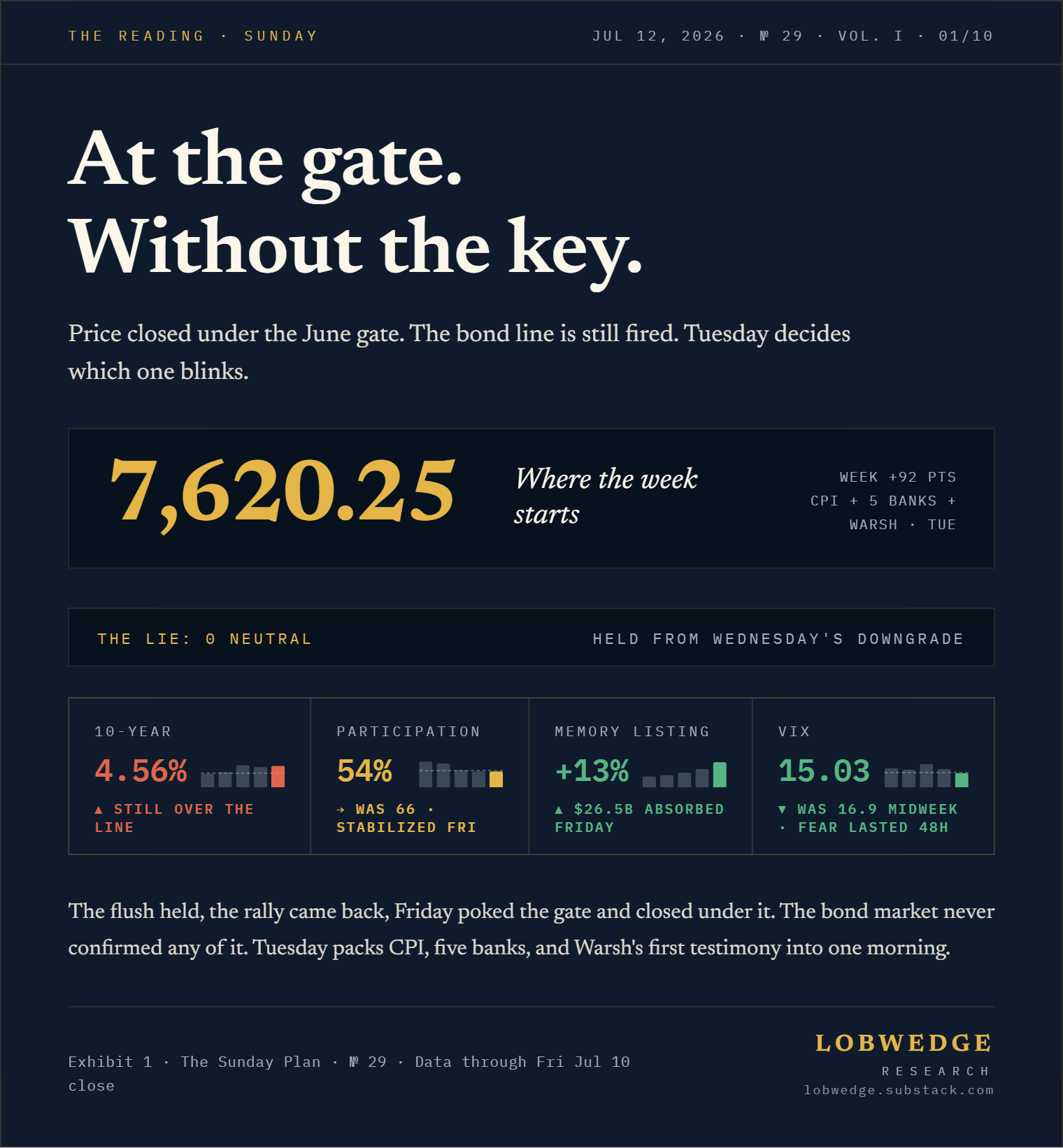
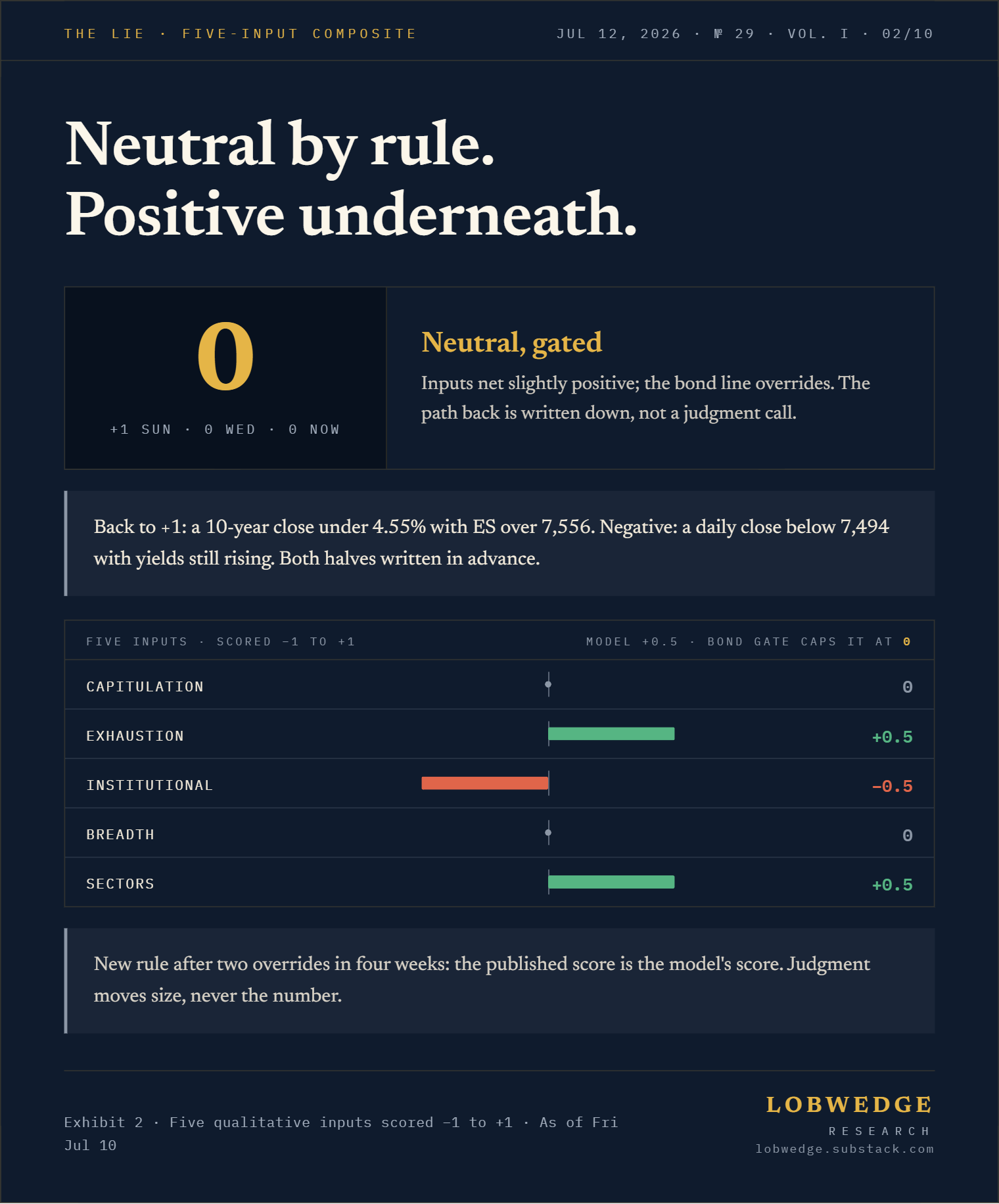
The Lie: 0 NEUTRAL, held from Wednesday’s downgrade. The inputs underneath actually lean slightly positive now. The bond line is the governor, and it’s still on. The exact condition that restores the score is below the fold, and it’s mechanical.
One thing worth keeping even if you never subscribe. Earnings season opened with 89 percent of early reporters beating estimates, by 14.5 percent in aggregate, and the average stock that beat got sold 3.7 percent. The five-year norm is a 1 percent gain. When beats get sold, the estimate isn’t the bar anymore. The price is. The index costs 20.5 times forward earnings against a 19.9 five-year average, so “good quarter” is already in the price you’re paying. This week, don’t watch who beats. Watch the first names whose beats get bought. That’s where expectations are still low, and that list is next quarter’s leadership.
Below the fold: the full scorecard and the rule we changed, the eight-level map, two sized trades with entries and stops, the CPI playbook written both ways, and why Friday’s expiration matters more than any print this week.
