

Last week cost us on the index and paid us everywhere else. The ES pivot buy stopped out on Tuesday’s close, by the rule: one fill, one small loss. The single-name book kept working through the same sessions: Agilent (A) through its target, Freeport’s (FCX) lotto half banked, the energy set closed as winners. That split is the lesson: the index can sit in a range while the money rotates underneath it, and the job is owning the rotation at the right size instead of forcing the index.
Three weeks of index gains ended with it, and the selling was never an equity story: the 30-year traded at two-decade-high yields and set direction every session. Now the calendar crowds: July inflation Wednesday morning, NVIDIA (NVDA) Wednesday night, and Kevin Warsh’s first Jackson Hole keynote as chair Friday, into an argument about whether the next move is a hike.
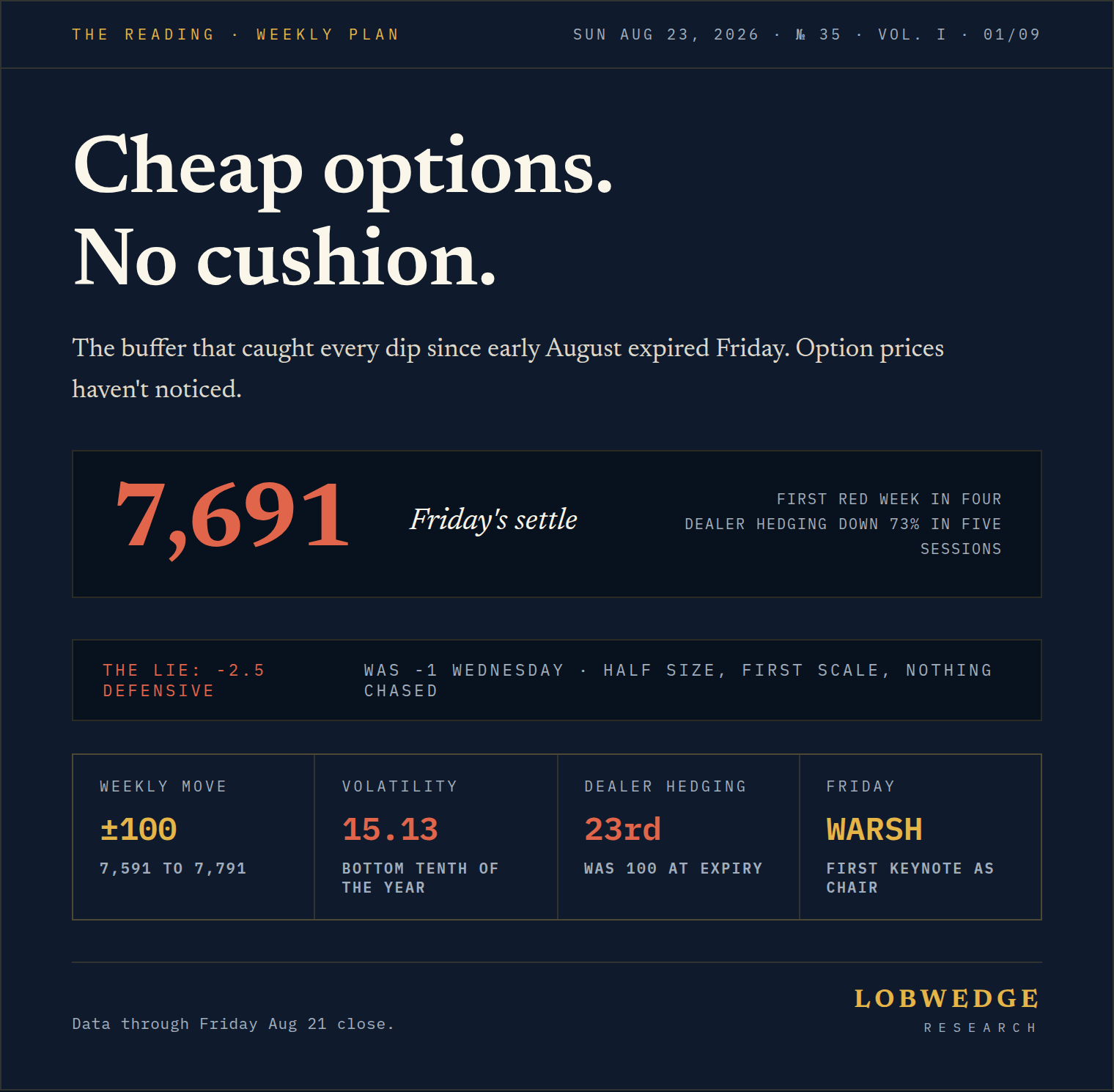
The Lie drops to -2.5, from zero last Sunday and minus one Wednesday, the lowest print since the June washout. Every trade below is sized around this number: swing hard when the regime pays, small when it doesn’t.
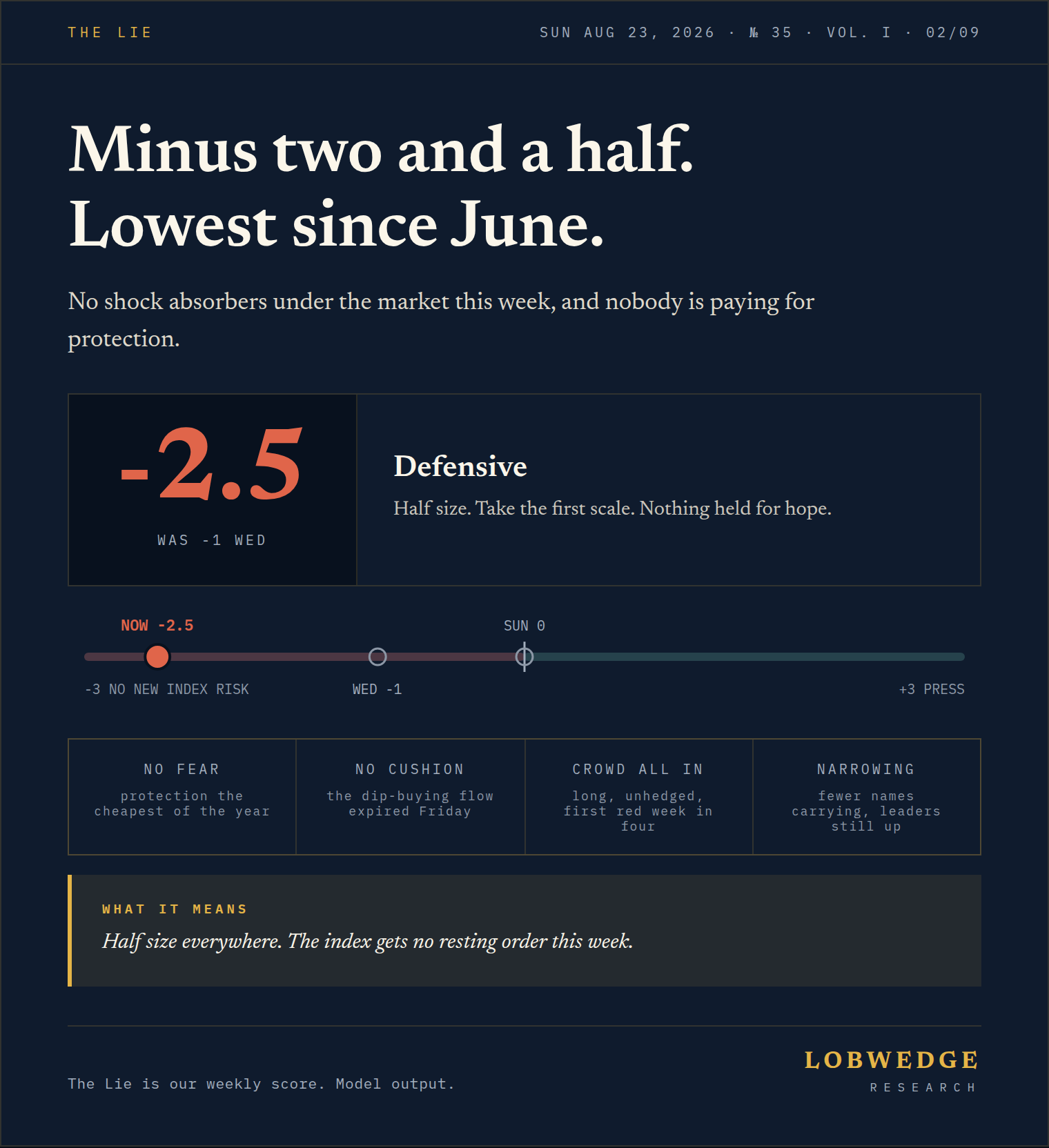
Dealer hedging isn’t a mood, it’s an inventory. Held long, dealers buy every dip mechanically, and that flow is what pins a market inside a band. It rolls off on dates published well in advance, and Friday was one of the big ones. Before you size anything this week, check what expired behind you.
The process runs the same seven days every week: levels published Sunday before the market can grade them, graded Wednesday and Friday in public, models rebuilt from the grades. It runs on rules because the expensive mistakes in trading are human, stops widened in hope, winners cut for comfort, size doubled after a loss, and an agentic system can’t make them. Everything below gets graded next Sunday, whichever way it goes.
Below the fold: seven prices and the arithmetic on why none of them earns a resting order yet, what the hedging actually reads, the trade we ran the numbers on and passed, the alert list going live Monday, and how the book gets sized.
